




Safety signage is not decoration. In Abu Dhabi, it is a compliance requirement tied directly to workplace safety regulation, and getting it wrong carries real risk: to workers, to visitors, and to the business itself if an inspection finds missing or inadequate signage. Whether you run a construction site, a warehouse, a clinic, or a standard office, understanding what safety signage abu dhabi authorities actually expect will save you from a scramble during your next HSE audit.
The Regulation Behind the Signs
Workplace safety in Abu Dhabi falls under the Abu Dhabi Occupational Safety and Health System Framework, widely known as OSHAD-SF, which is overseen by the Abu Dhabi Public Health Centre. The framework includes a dedicated Code of Practice for signage, OSHAD-SF CoP 17.0, Safety Signage and Signals, which sets out how hazard warnings, mandatory instructions, and emergency information must be communicated visually across a worksite. According to the Abu Dhabi Occupational Safety and Health System Framework manual, compliance obligations scale with an entity’s risk classification, meaning higher-risk sectors such as construction, oil and gas, and manufacturing face stricter signage requirements than a standard office.
The Main Categories of Safety Signage
Most Abu Dhabi workplaces need a mix of the following, and missing even one category is a common reason businesses fail an internal or third-party HSE audit:
- Prohibition signs: red circle with a diagonal line, used for actions that are not allowed, such as no smoking or no unauthorized entry.
- Warning signs: yellow triangle signs marking hazards like electrical risk, forklift traffic, or slippery surfaces.
- Mandatory signs: blue circular signs instructing required actions, such as wearing a hard hat, safety glasses, or hearing protection.
- Emergency and fire signs: green signs marking exits, assembly points, and first aid stations, plus red signage for fire equipment.
- Information signs: general directional or facility signage that supports safe movement around a site.
Choosing the Right Material for Each Environment
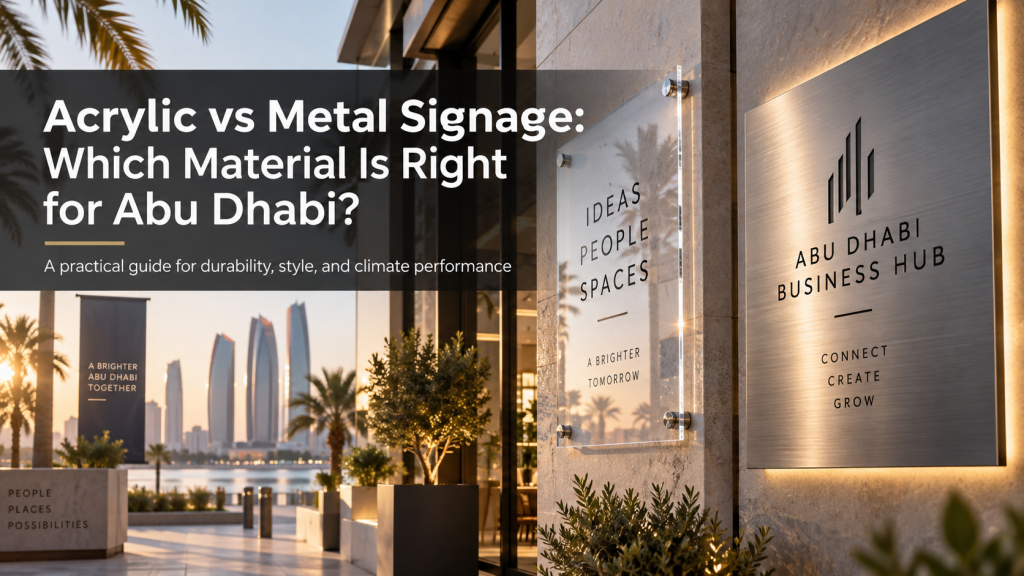
The right safety sign is only useful if it survives the environment it is placed in. Indoor office signage can usually be produced in acrylic, which gives a clean, professional finish for reception areas and mandatory PPE signs near entrances. Outdoor, industrial, and construction site signage generally needs aluminum or another rust-resistant material, since these signs are exposed to sun, dust, and in many cases direct handling. Facilities that need visibility during a power outage, such as evacuation routes in large buildings, should also consider photoluminescent signage that glows in low light. Our safety signage service covers all of these options and is fabricated to match the specific hazards and layout of a site rather than using a generic template.
Where Businesses Commonly Fall Short
- Faded or damaged signs left in place. A sign that is no longer legible does not meet compliance requirements even if it was originally approved.
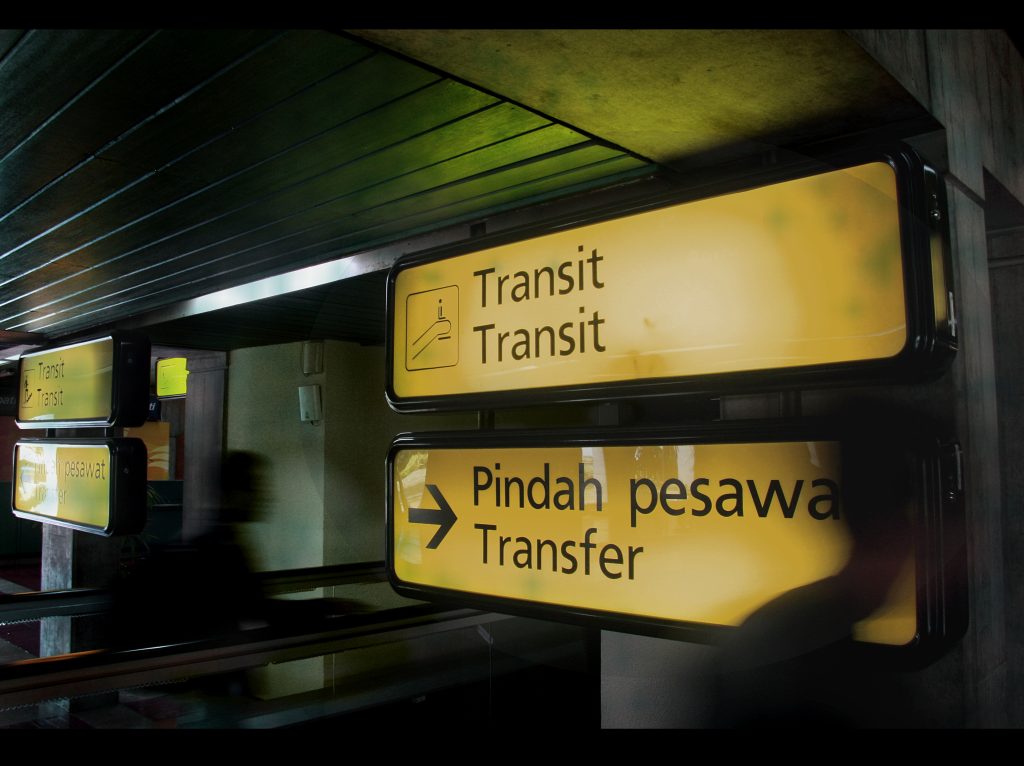
- Signage only in English. Multi-language signage, particularly where a large share of the workforce may not read English fluently, is a common gap flagged during audits.
- Missing assembly point or evacuation signage at facilities that have grown or been renovated since the original safety plan was made.
- Using printed paper or temporary signs for permanent hazards instead of fabricated, durable signage built for the location.
A Simple Compliance Checklist
- Map every hazard and required safety instruction across your site, not just the entrance.
- Match each one to the correct sign category and color coding.
- Choose materials suited to indoor, outdoor, or industrial exposure.
- Confirm bilingual or multi-language signage where your workforce needs it.
- Schedule a periodic walk-through to replace faded, damaged, or outdated signage.
Frequently Asked Questions
Is safety signage legally required for a small office in Abu Dhabi?
Yes. OSHAD-SF applies to employers of all sizes in Abu Dhabi, though the level of required documentation and signage scales with the entity’s risk classification. Even a low-risk office typically needs basic emergency exit, assembly point, and mandatory PPE signage where relevant.
What is the difference between OSHAD-SF and general HSE signage?
OSHAD-SF is the specific regulatory framework governing occupational safety and health in Abu Dhabi, including CoP 17.0 for signage and signals. “HSE signage” is the general term for the signs themselves. In practice, HSE signage in Abu Dhabi should be designed to meet OSHAD-SF requirements specifically, not a generic international standard alone.
Can safety signage be customized with our company branding?
Yes, as long as the mandatory colors, symbols, and wording required for that sign category remain clear and compliant. Branding elements are usually added around the required safety content, not in place of it.
How often should safety signage be inspected or replaced?
There is no single fixed interval, but a practical approach is to inspect signage during routine site safety walks and replace anything that is faded, cracked, obscured, or no longer accurate due to layout changes.
Suggested alt text: Yellow and blue OSHAD-compliant safety signage installed at an Abu Dhabi industrial site
CTA: Due for a safety signage review? Request a compliance-focused site assessment from Al Jihad Advertising and get a full breakdown of what your facility needs.